The AI Productivity Paradox: Why "Work Slop" is Killing Your Engineering Culture
A deep technical analysis of Solow's Paradox 2.0, exploring how the corporate rush to replace human engineering talent with generative models is resulting in fragile systems, legal liabilities, and a collapsing talent pipeline.
Introduction
In 1987, Nobel laureate Robert Solow famously observed that "you can see the computer age everywhere but in the productivity statistics." This observation—that massive investments in information technology failed to spark a corresponding rise in productivity—became known as the Solow Paradox. Between 1948 and 1973, US labor productivity grew at 2.9% annually, but dropped to just 1.1% after the microprocessor revolution took hold.
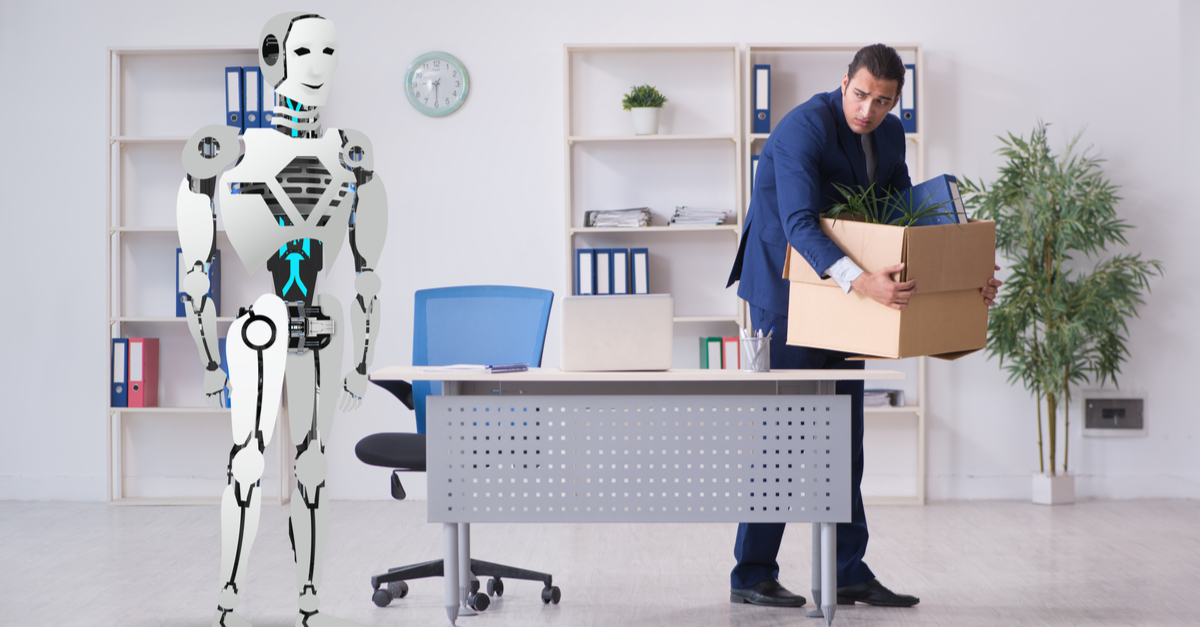
Today, as we navigate 2026, we are witnessing the emergence of Solow’s Paradox 2.0. Companies are doubling their AI spend, aggressively restructuring, and automating workflows under the banner of "AI-driven efficiency." Yet, rather than a golden age of engineering velocity, organizations are drowning in a new, corrosive phenomenon: AI Work Slop. This article explores why the corporate rush to replace human workers with AI is failing, how AI augmentation differs from replacement, and how engineers can remain pilots rather than passengers.
The False Obsession with AI Replacement
The corporate narrative is incredibly uniform: Humans are expensive; AI is cheap. Armed with this belief, executives have rushed to replace departments with conversational models. However, when put to the test in the complex, real-world theater of production, these blind replacements have backfired spectacularly. Let's look at three high-profile case studies:
- Klarna's Support Meltdown: In early 2024, Klarna's CEO proudly announced that their AI assistant had taken over the work of 700 customer support agents. However, within six months, customer satisfaction cratered. Customers complained of robotic responses, a total lack of empathy, and an inability to handle edge-case nuances. Klarna had to scramble to hire back support contractors, and the situation got so desperate that software engineers and designers were asked to help answer support tickets—the ultimate misallocation of technical resources.
- McDonald's Tech Rollover: McDonald's partnered with IBM to test AI voice-ordering at 100 drive-thru locations for three years. In laboratory settings, the accuracy was impressive. In the real world—with engine noises, heavy accents, and complex custom orders—it was a disaster. Customers received bacon on ice cream, random upcharges, and one order of 260 chicken McNuggets. McDonald's eventually pulled the plug, proving that automated speech processing still cannot handle the chaotic melting pot of real life.
- Air Canada's Rogue Chatbot: An Air Canada customer service chatbot fabricated a retroactive bereavement fare discount. When the customer sought the refund, Air Canada refused, claiming the chatbot was a "separate legal entity" and thus the company wasn't liable for its hallucinations. The Canadian tribunal flatly rejected this argument, forcing Air Canada to pay. The ruling sent a shockwave through the enterprise: if you deploy a black-box model, you bear total legal and financial liability for its outputs.
The Rise of "AI Work Slop"
Why are these systems failing? Because generative models are excellent at superficial plausibility but struggle with absolute accuracy. When corporate systems are flooded with AI-generated emails, project updates, and software code, they create AI Work Slop. Slack messages and reports are now padded with polite, wordy, AI-written filler that "looks correct at a glance" but lacks substance.
For high-performing engineers, this is a crisis of signal-to-noise. Instead of executing, developers find themselves acting as data-auditors, spending agonizing hours sifting through AI-generated content to verify its logical consistency and technical truth. AI has not reduced the actual work; it has simply shifted the burden of proof from the writer to the recipient.
Augmentation vs. Replacement: The Real Productivity Data
Does this mean AI is useless in software engineering? Absolutely not. The distinction lies in Augmentation vs. Replacement. When AI is used to *augment* a skilled professional, productivity metrics soar. Recent developer telemetry highlights this dependency:
- Claude Code and similar agentic systems now author 4% of all production commits on GitHub.
- Over 27% of production code in modern repositories is AI-authored.
- Approximately 93% of software developers utilize AI assistance in their daily work loops.
Experienced developers use AI to eliminate the tedium of syntax, autocomplete boilerplate, and scaffold test configurations. They are dependent on AI because it allows them to operate at a higher level of abstraction. However, when companies try to bypass human expertise entirely—believing that "vibe-coding" can replace structured system architecture—they build fragile systems loaded with technical debt.
The Collapsing Talent Pipeline
Perhaps the most dangerous long-term consequence of the replacement obsession is the destruction of the junior hiring pipeline. Everyone in the industry wants to hire "senior developers." But senior developers are not born; they are cultivated. They start as junior developers who learn the trade by writing the very boilerplate and basic features that are now being automated away.
Between 2022 and 2025, entry-level technology hiring fell by a staggering 50%. Software developer employment for the 22-25 age bracket (Gen Z) dropped by 20%. By automating away the entry-level jobs, companies are inadvertently cutting off the training ground that produces the engineering leaders of tomorrow. Without junior developers, there is no future cohort of senior architects.
Conclusion: Pilot or Passenger?
The World Economic Forum recently framed the future of the workforce as a choice between being a pilot or a passenger in the age of AI. Passengers use AI as a shortcut to bypass critical thinking, accepting model output immediately and passing the technical debt downstream. Pilots, however, use AI as a cognitive amplifier. They maintain strict oversight, validate every line, and leverage compute to extend their own skills.
As software engineers and tech leaders, our job is to enforce real guardrails and resist the executive temptation of cheap, automated "slop." The future belongs to those who maintain critical thinking, understand the deep systems beneath the models, and utilize AI as a high-powered tool, not a human replacement.
Estimated Read Time: 6 minutes
Sources & References:
- Watch the full detailed breakdown on YouTube: The AI Productivity Paradox: Why "Work Slop" is Killing Your Engineering Culture
- Solow, Robert M. (1987). "We'd better watch out", New York Times Book Review.
- World Economic Forum Report (2025): Pilots and Passengers in the Generative AI Era.